Sage green kitchen ideas for a calm, natural look
By Barry, Director, Zebra Kitchens and Interiors
Last updated · 5 min read
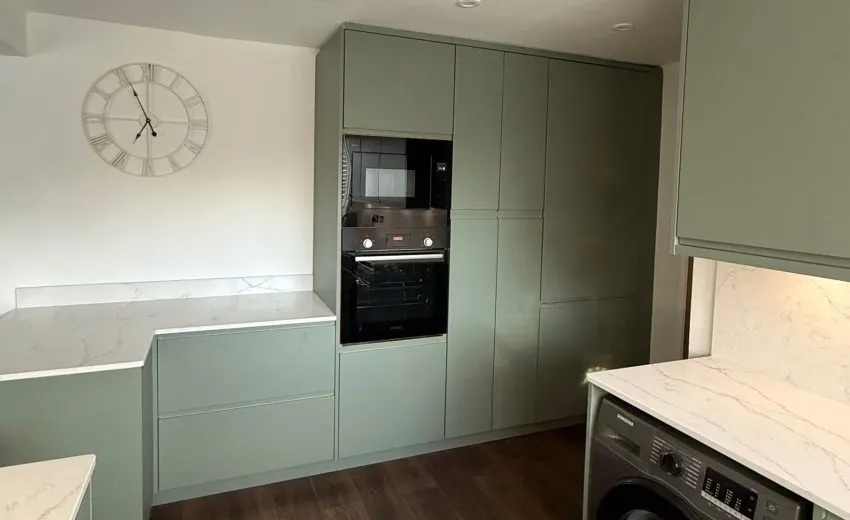
Sage green kitchen ideas have become some of the most popular requests we see, because the colour manages to feel fresh without being loud. Sage is a soft, grey-leaning green that sits somewhere between neutral and colour. It works in modern handleless kitchens and in traditional shaker designs, and it pairs comfortably with wood, white, cream and brass.
One of our recent projects in Solihull B90 combines sage green with mussel doors in a handleless, two-tone design that was redesigned for practicality. This guide uses that kind of thinking to explore how to use sage well: where to put it, what to pair it with and how lighting and worktops change the result. If you would like to see the colour in your own room, Barry can bring samples on a free home visit.
Why sage green kitchen ideas work so well
Sage is calm. Its grey undertone stops it from feeling too bright, so it suits rooms that get a lot of use and need to feel relaxed. It also changes gently through the day, looking cooler in morning light and warmer under evening lighting. Because it reads as a natural colour, it rarely clashes with flooring or furniture in neighbouring rooms.
That flexibility is useful in open-plan kitchen diners, where the kitchen has to sit comfortably with sofas, dining chairs and other furnishings.
Two-tone pairings
Sage works especially well in a two-tone kitchen. Common approaches include:
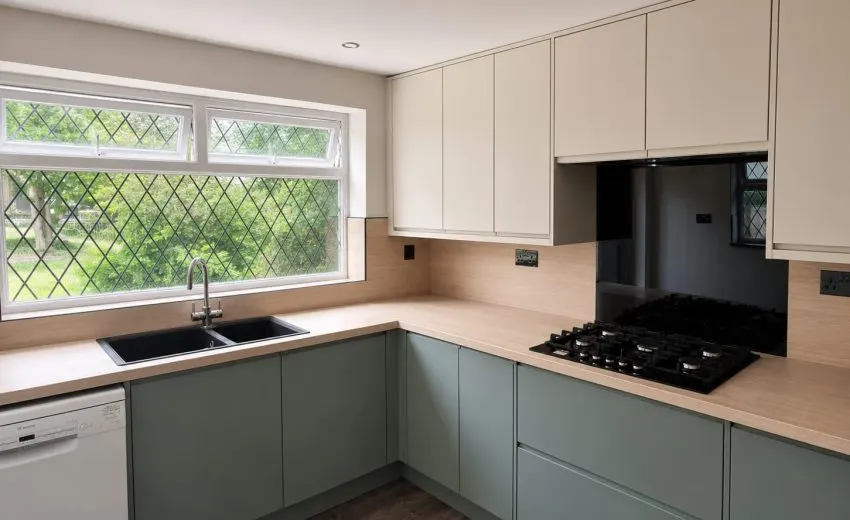
- Sage base units with lighter wall units, which keeps the room bright
- Sage on an island with a neutral main run, making the island a feature
- Sage with mussel or soft grey, as in our Solihull project
- Sage tall units framing a pale run of base cabinets
- Sage with natural wood shelving or an oak-effect island
Keeping the darker or stronger colour low tends to ground the room, while lighter wall units stop it feeling enclosed.
Worktops that suit sage
White or warm white quartz is the most popular partner for sage, particularly with a soft grey or gold vein. It gives a clean contrast and keeps the kitchen bright. Cream quartz suits warmer, more traditional kitchens. Wood worktops bring out the natural side of sage and suit a country or shaker look, though they need more care than quartz.
Darker worktops can work too, but they make the kitchen feel moodier. Compare samples against a sage door before deciding.
Handles, taps and metal finishes
Hardware has a big effect on how sage reads. Brushed brass and gold give warmth and suit shaker doors. Matt black looks crisp and modern. Brushed steel keeps things understated. In a handleless kitchen the focus moves to the door colour itself and the line of the worktop.
Try to keep tap, handle and lighting finishes consistent, or deliberately choose two that work together, so the room feels planned.
Shaker or handleless
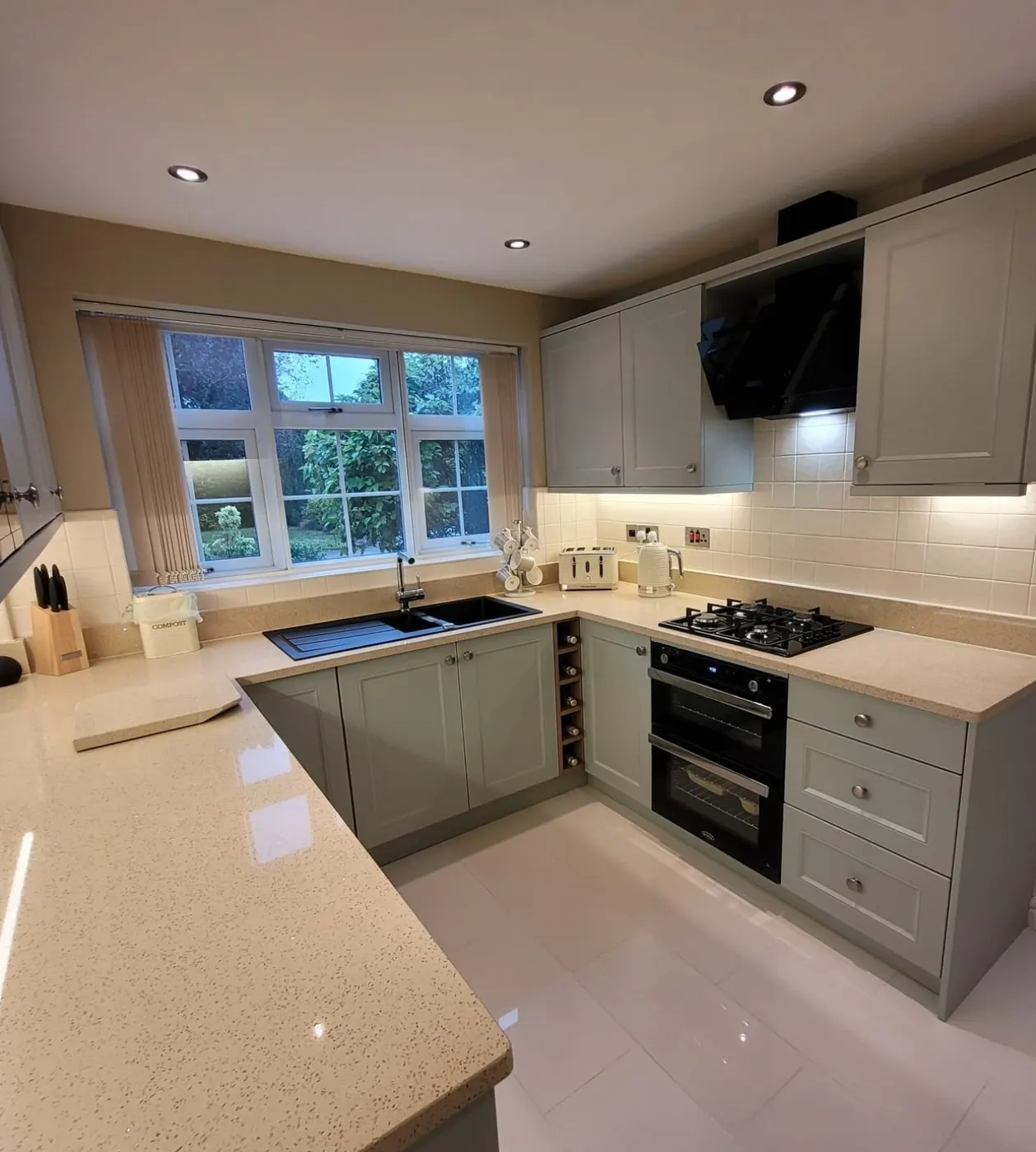
Sage green shaker doors give a classic, cottage feel and suit period homes and traditional rooms. Handleless sage doors feel calmer and more contemporary, with long uninterrupted lines. Both are popular, and the choice usually comes down to the style of the house and how you want the room to feel.
Our other green projects include a meadow green shaker makeover in Bloxwich and a reed green kitchen with white veined quartz in Willenhall, which show how different greens behave.
Walls, floors and splashbacks
With sage cabinets, walls in a soft white or warm off-white usually work best, letting the cabinets carry the colour. Wood or wood-effect floors suit the natural feel, while pale stone-effect tiles keep things light. For splashbacks, a matching quartz upstand, a simple tile or a pale glass panel all sit well with sage.
Plants and natural textures such as linen blinds or rattan lighting finish the look without needing much else.
Sage green as a makeover
If your cabinets are sound, you may not need a full new kitchen to bring in sage green. New doors and worktops can change the whole room. Our published guidance is that door swaps start from around £2,000, worktops and doors together from around £4,000 and makeovers from around £6,000, depending on your room, products and work.
Getting the shade right
Sage covers a wide family of greens. Some lean grey and feel almost neutral, while others lean yellow or blue and feel stronger. North-facing kitchens with cooler light can make a grey sage look flat, so a slightly warmer sage often works better there. South-facing rooms can take cooler versions without feeling cold.
Always look at a real door sample in your own room at different times of day before ordering. Paint swatches and screen colours are rarely reliable for cabinet finishes, which are made differently from wall paint. It also helps to see the green next to your chosen worktop and floor together, as each changes how the others look.
If you are unsure, start with a softer, greyer sage on the base units and a pale colour above. That keeps the room light and lets you enjoy the colour without it dominating, and it is very easy to bring in more green through accessories later. Barry can bring several sage samples on a free home visit so you can compare them side by side against your worktop and floor.
Frequently asked questions
Related services, projects and areas
Service: Kitchen Makeovers
Kitchen questions: Kitchen renovation questions answered