Quartz worktops cost: what affects the price
By Barry, Director, Zebra Kitchens and Interiors
Last updated · 5 min read
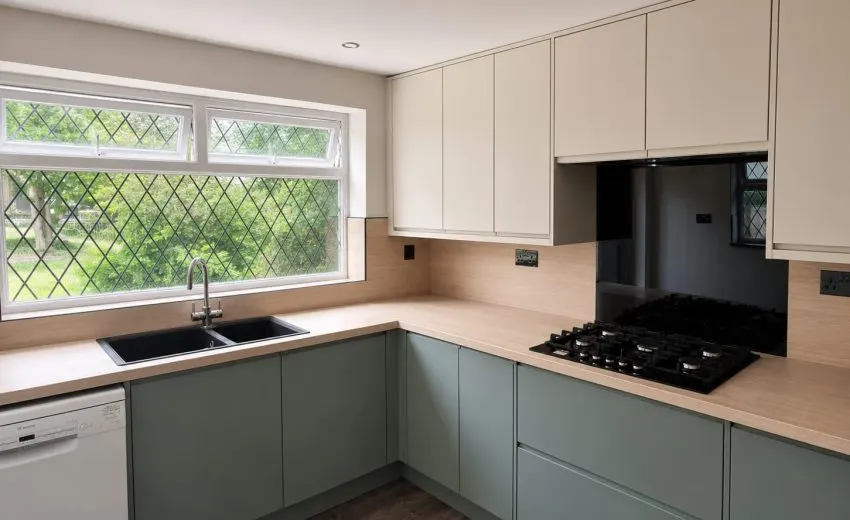
Quartz worktops cost more to understand than many people expect, because there is no single price per kitchen. Each set of worktops is templated and made for one room, so the figure depends on how much stone is needed and how much work goes into cutting and finishing it. Two kitchens with the same quartz colour can end up with quite different quotes.
We fit quartz worktops in many of our kitchens and makeovers, and we always quote for the specific room. Rather than give made-up figures, this guide explains what actually drives the price, so you can see where your money goes and where you have choices. If you would like a figure for your own kitchen, Barry offers a free design and quote, including a free home visit to measure up.
Size and layout set the starting point for quartz worktops cost
The amount of material is the first thing that shapes the price. Quartz comes in large slabs, and your worktops are cut from them. A short straight run uses far less than an L-shaped or U-shaped kitchen with an island. Long runs may also need joints, and the position of those joints affects how the slabs are used.
Islands and peninsulas add both surface area and finished edges on more sides. Breakfast bar overhangs need suitable support. Upstands and splashbacks in matching quartz add further material, so it is worth deciding early whether you want them or prefer a different splashback.
Thickness and how it changes the look
Quartz is commonly available in more than one thickness. A thinner worktop gives a slim, modern line, while a thicker one gives a more solid look that some people prefer for traditional or shaker-style kitchens. Thickness affects both the material and the handling, so it can change the price.
The right thickness also depends on the cabinets, the style of the room and details such as an undermounted sink or a hob. We can show you samples in the showroom so you can see the difference rather than guessing from a photograph.
Edge profiles and finishing details
Every exposed edge has to be shaped and polished. A simple square or slightly eased edge is usually the most straightforward. More decorative profiles take more work. The more exposed edges your design has, particularly with an island, the more finishing is involved.
Other details also add work, such as mitred edges that make the top look thicker, or a waterfall end where the worktop runs down the side of a cabinet to the floor. These can look striking but should be weighed against your budget.
Cut-outs for sinks, hobs and taps
Each opening in the worktop has to be cut and finished accurately. Typical cut-outs include:
- An undermounted sink, which needs a polished cut-out
- A hob, sized to the appliance you have chosen
- Tap holes and any extra holes for soap dispensers or boiling water taps
- Drainer grooves cut into the surface beside the sink
- Sockets or pop-up power in an island
Choosing your sink, tap and hob before templating matters, because the cut-outs are made to their exact sizes. Changing an appliance later can mean the worktop no longer fits it.
Colour and pattern
Quartz is available in plain colours, subtle speckles and bold veined designs. Different ranges and patterns can be priced differently, and heavily veined designs may need more planning so the pattern flows sensibly across joints. Pale colours such as white with soft veining are popular, and darker or warmer tones work well with wood or painted doors.
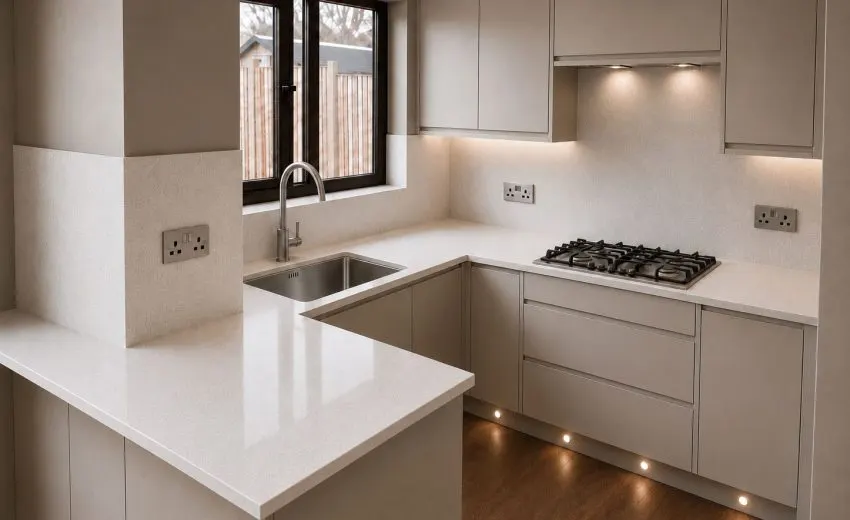
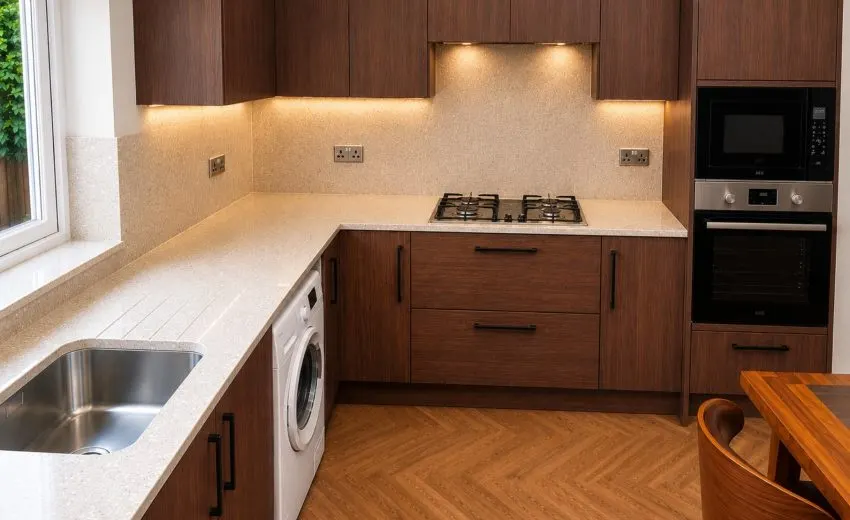
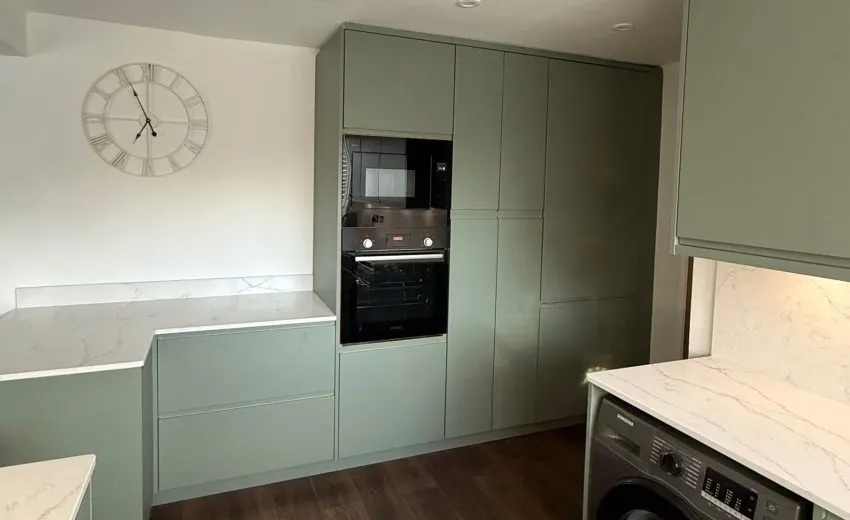
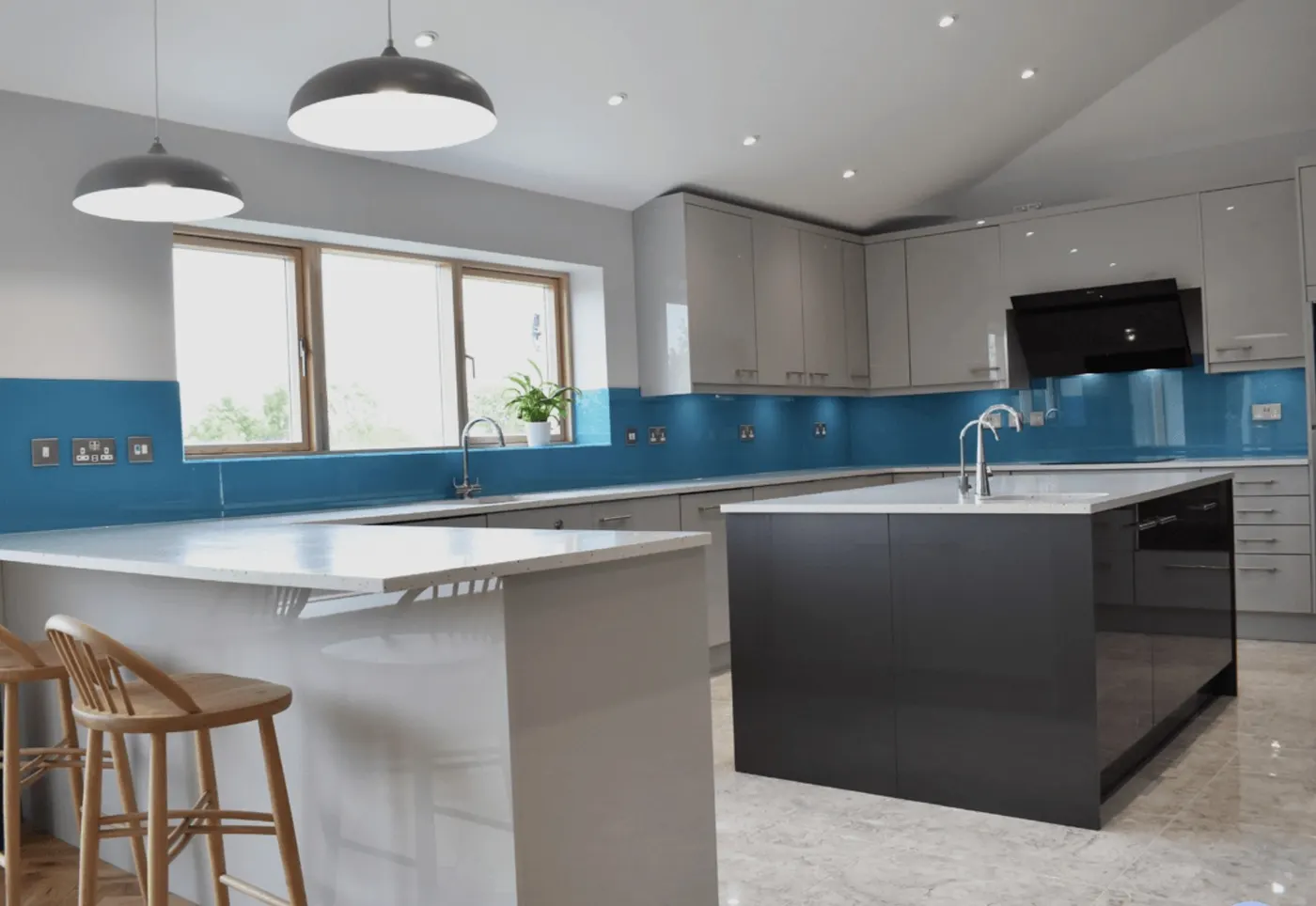
Our project photos include white quartz with soft blue veining and cream quartz with dark walnut, which show how much the colour changes the feel of a room.
Templating, fitting and the rest of the job
Quartz is not cut on site in the way some laminate worktops are. Once the cabinets are in place, the space is measured precisely, the worktops are made to that template and then fitted. That process is part of the cost and part of why the result fits well.
If you are replacing worktops only, the condition of the existing cabinets matters. They need to be level and sound enough to support stone. Our published guidance is that worktop replacements start from around £2,000, and worktops and doors together from around £4,000, but the actual figure always depends on your room, products and work.
Getting an accurate quote
The best way to get a reliable figure is to have the kitchen measured and the layout agreed. Barry can visit, measure, talk you through colours and edges and give you a quote that reflects your actual kitchen rather than a rough estimate. You can also see quartz samples at our showroom on Walsall Road in Great Wyrley.
When you compare quotes from different suppliers, check that each one includes the same things: thickness, edge profile, number of cut-outs, upstands, templating and fitting. A lower figure that leaves out cut-outs or fitting is not really cheaper. Asking for the details in writing makes it much easier to compare like with like and avoid surprises once the job is under way.
Frequently asked questions
Related services, projects and areas
Service: Kitchen Makeovers
Kitchen questions: Kitchen renovation questions answered